
Introduction
Subway wrap calories can vary a lot depending on the protein, cheese, sauces, vegetables, and other toppings you choose. In the U.S., Subway’s nutrition information shows that wraps can range from about 330 calories to more than 800 calories for some menu combinations.
One important detail is easy to miss: the tortilla itself can add a large number of calories before you add meat, cheese, or sauce. Subway currently lists its wrap at about 297 calories in its online U.S. menu.
That means a wrap is not automatically a low-calorie choice. The final nutrition depends on what goes inside it.
This guide explains Subway wrap calories in simple terms. You will learn which wraps are higher or lower in calories, how toppings change the total, and how to build a wrap that fits your nutrition goals.
Table of Contents
What Are Subway Wrap Calories?
Subway wrap calories are the total calories in the tortilla, protein, cheese, vegetables, sauces, and other ingredients used to make a Subway wrap.
A calorie is a unit used to measure the energy in food. Your body uses energy from food for daily activities such as walking, working, exercising, and basic body functions.
The biggest factor to understand is that Subway does not have one single calorie amount for every wrap. Each recipe has its own nutrition profile.
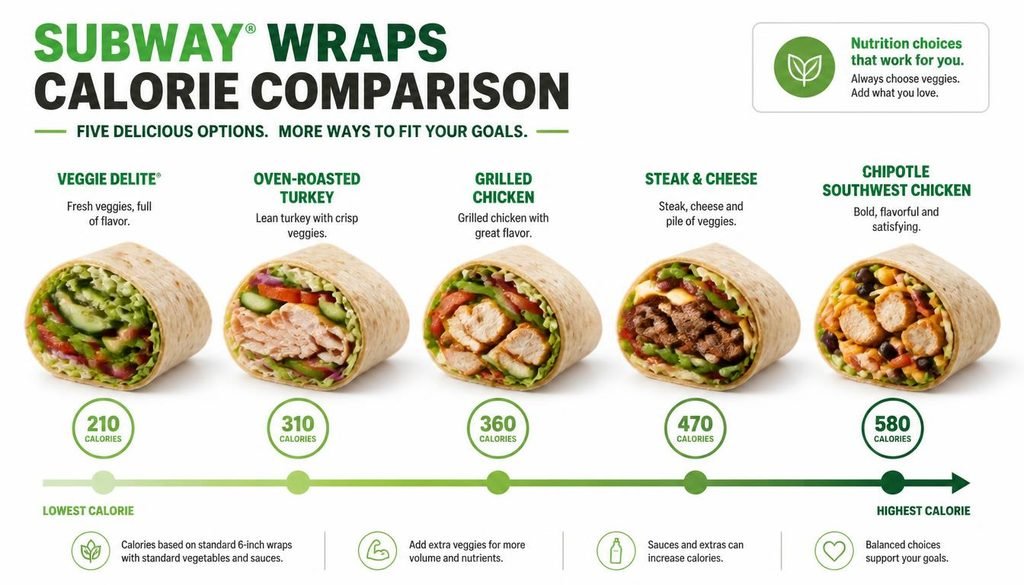
For example, Subway’s U.S. nutrition information lists these wrap examples:
| Subway Wrap | Calories | Protein |
|---|---|---|
| Veggie Delite Wrap | 330 | 10 g |
| Oven Roasted Turkey Wrap | 420 | 30 g |
| Grilled Chicken Wrap | 470 | 42 g |
| Roast Beef Wrap | 500 | 38 g |
| Rotisserie-Style Chicken Wrap | 500 | 38 g |
| Cold Cut Combo Wrap | 530 | 27 g |
| Buffalo Chicken Wrap | 560 | 42 g |
| Steak Wrap | 570 | 43 g |
| Meatball Marinara Wrap | 810 | 32 g |
| Tuna Wrap | 820 | 33 g |
These figures come from Subway’s U.S. nutrition information and can change as menus and recipes change.
So, when someone asks, “How many calories are in a Subway wrap?” the best answer is: it depends on the wrap and what you add to it.
How Do Subway Wrap Calories Work?
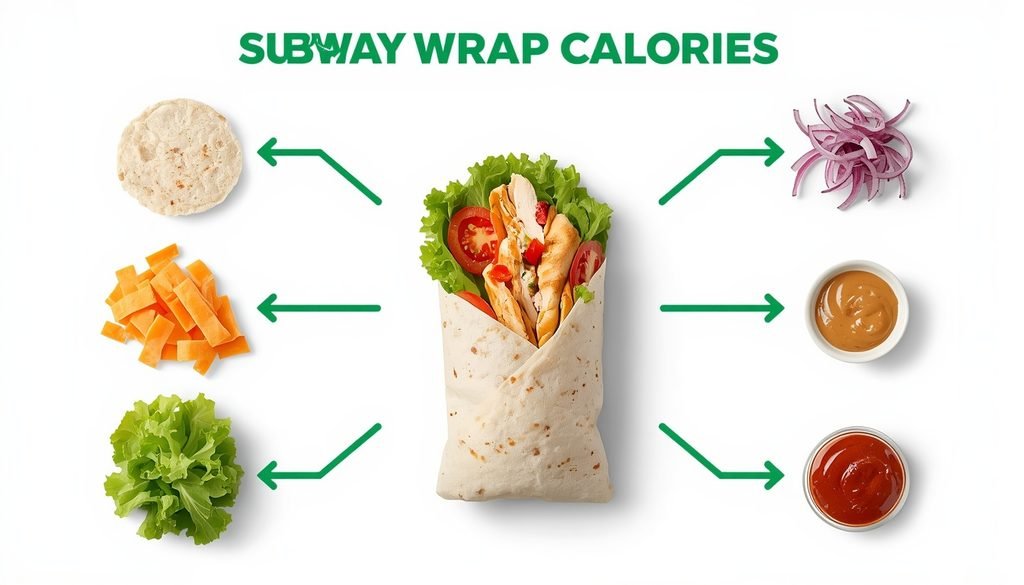
Subway wrap calories come from several parts of the meal. Understanding each part makes it easier to estimate your final total.
The Tortilla Adds a Large Share of the Calories
The tortilla is the base of the wrap. Subway’s current U.S. online menu lists the wrap itself at about 297 calories.
That is important because the tortilla can account for a large portion of the calories in a simple wrap.
For example, a basic vegetable wrap can stay relatively low in calories because the vegetables add fewer calories than foods such as cheese, meat, or creamy sauces. A meat-heavy wrap can become much higher in calories.
Protein Changes the Total
The protein you choose can make a major difference.
Chicken, turkey, roast beef, tuna, steak, meatballs, and other proteins all have different calorie and protein amounts.
For example, Subway’s listed Grilled Chicken Wrap contains 470 calories and 42 grams of protein, while its Meatball Marinara Wrap contains 810 calories and 32 grams of protein.
This shows why calories and protein should be looked at together.
Cheese and Sauces Can Add More Calories
Cheese gives a wrap more flavor and can also add calories and fat. Sauces can have an even bigger effect, especially creamy sauces.
Two wraps with the same meat and vegetables can have very different calorie totals if one has several sauces or extra cheese.
Vegetables Usually Have a Smaller Calorie Impact
Vegetables such as lettuce, tomatoes, cucumbers, onions, peppers, spinach, and similar toppings generally add fewer calories than major ingredients such as the tortilla, meat, cheese, and sauces.
They can also add texture and variety to your meal.
Still, the exact nutrition depends on portion size and the specific ingredients used.
Subway Wrap Calories and Nutrition
Calories are only one part of a food’s nutrition. When comparing Subway wraps, it also helps to look at protein, carbohydrates, fat, fiber, and sodium.
Calories
Calories tell you how much energy the food provides.
For Subway wraps in the U.S., the listed calorie amounts can differ widely. The nutrition guide includes wraps from 330 calories for a Veggie Delite Wrap to 820 calories for a Tuna Wrap.
This wide range shows why it is better to check the exact wrap instead of assuming all wraps are similar.
Protein
Protein is important for many body functions and helps make a meal more filling for many people.
Some Subway wraps provide a substantial amount of protein. For example, the Grilled Chicken Wrap lists 42 grams of protein, while the Oven Roasted Turkey Wrap lists 30 grams.
A person looking for a higher-protein meal may want to compare both calories and protein rather than calories alone.
Carbohydrates
The tortilla is a major source of carbohydrates in a wrap.
Subway’s listed wraps often contain around 53 to 76 grams of carbohydrates, depending on the recipe.
The exact number can change with sauces, vegetables, and other additions.
Fat
Fat is another major part of the nutrition profile.
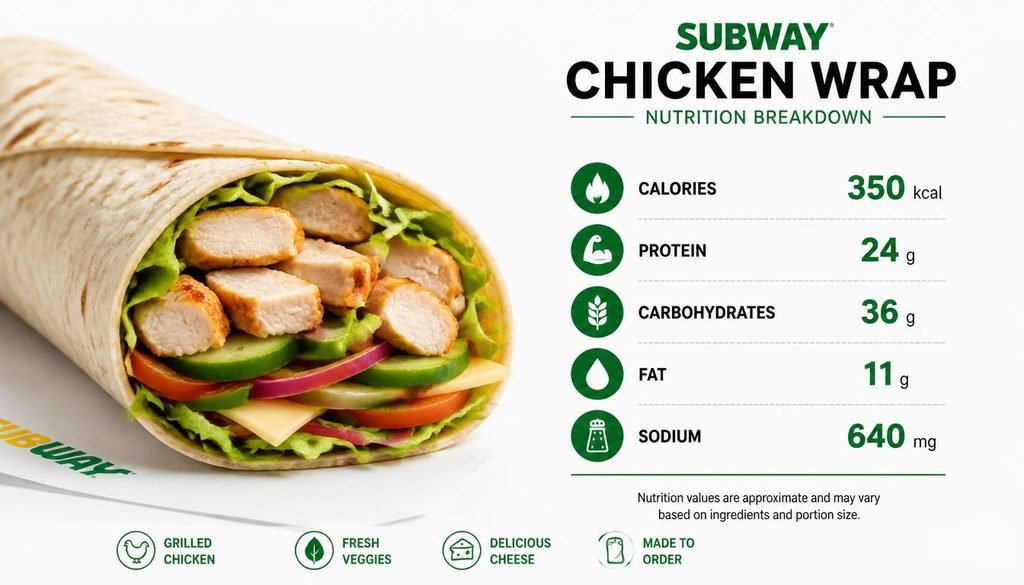
Some wraps are much higher in fat than others. The Meatball Marinara Wrap, for example, is listed at 43 grams of total fat, while the Grilled Chicken Wrap has 11 grams.
Creamy sauces, cheese, avocado, bacon, and certain meats can increase total fat.
Sodium
Sodium is especially worth checking if you are trying to limit your sodium intake.
Subway’s U.S. nutrition information shows that many wraps contain substantial amounts of sodium. For example, the Grilled Chicken Wrap lists 1,010 milligrams, while the Meatball Marinara Wrap lists 2,040 milligrams.
That difference can be significant.
Benefits of Choosing a Subway Wrap
A Subway wrap can be a useful meal choice because you can customize many parts of it.
You Can Control the Ingredients
One major advantage is customization.
You can choose the protein, vegetables, cheese, sauces, and other toppings. This gives you more control over the final nutrition than a fixed meal.
For example, you can choose turkey with lots of vegetables and a lighter amount of sauce rather than choosing a more calorie-dense combination.
You Can Get a High-Protein Meal
Some Subway wraps contain a good amount of protein.
The current U.S. nutrition information lists 42 grams of protein for the Grilled Chicken Wrap and 43 grams for the Steak Wrap.
Protein needs vary from person to person, but these examples show that a wrap can provide a protein-rich meal.
You Can Add Plenty of Vegetables
Vegetable toppings can make a wrap more varied and satisfying without being the main source of calories.
Lettuce, tomatoes, cucumbers, onions, peppers, and spinach can give you more flavor, crunch, and variety.
How to Build a Lower-Calorie Subway Wrap
There is no single “best” Subway wrap for everyone. Your ideal choice depends on your calorie needs, preferences, and overall diet.
Still, a few simple steps can help you lower the calorie total.
Step 1: Start With the Main Protein
Choose the protein that fits your goals.
For a lower-calorie option, compare the nutrition information instead of guessing. Subway’s listed Oven Roasted Turkey Wrap has 420 calories, while the Grilled Chicken Wrap has 470 calories.
Step 2: Add Plenty of Vegetables
Choose vegetables you enjoy.
Adding several vegetable toppings can make the wrap more colorful and flavorful without relying only on cheese or sauce for taste.
Step 3: Watch Cheese and Sauce Portions
Cheese and sauce can change the calorie total quickly.
A simple way to keep the total lower is to avoid adding several high-calorie extras at once. You can still include flavor-focused toppings without turning the wrap into a much larger meal.
Step 4: Check the Nutrition Information
Before ordering, check the current Subway nutrition information for the exact item and location.
Subway notes that nutrition information is available and that calorie needs vary from person to person.
Menu items can also change over time, so older nutrition lists may not match the current menu.
Practical Examples
The examples below are meant to show how different choices can affect a meal. They are based on Subway’s published U.S. menu examples, not estimates for custom orders.
Example 1: Lower-Calorie Wrap Choice
A Veggie Delite Wrap is listed at 330 calories and 10 grams of protein.
This can be a useful example for someone who wants a lighter wrap. However, adding cheese, sauces, or other extras would change the total.
Example 2: Higher-Protein Wrap Choice
The Grilled Chicken Wrap is listed at 470 calories and 42 grams of protein.
Compared with the Veggie Delite Wrap, it contains more calories but also much more protein.
This shows why it is important to consider the full nutrition profile rather than choosing food based only on the lowest calorie number.
Common Mistakes
Mistake 1: Assuming Every Wrap Is Low in Calories
A wrap may look lighter than a large sandwich, but the tortilla itself can contain a significant number of calories.
Subway currently lists the wrap at about 297 calories before the rest of the ingredients are counted.
So, choosing a wrap does not automatically mean choosing a low-calorie meal.
Mistake 2: Ignoring Sauces and Extras
People often focus on the meat and forget about sauces, cheese, bacon, avocado, and other additions.
Those extras can raise calories, fat, and sodium. For example, Subway’s online menu shows individual add-ons with their own calorie values, including bacon and avocado options.
Mistake 3: Looking Only at Calories
Calories are useful, but they are not the whole story.
A 500-calorie wrap with more protein and fiber may fit your needs differently from a 500-calorie wrap with a different balance of nutrients.
Mistake 4: Using Old Nutrition Information
Restaurant menus can change.
Subway’s current online menu and nutrition documents may differ from older nutrition charts found on other websites. For the most accurate information, check the current official Subway nutrition information before ordering.
Tips and Best Practices
Use these simple tips when checking Subway wrap calories:
- Compare the full nutrition information, not calories alone.
- Look at protein when choosing between different wraps.
- Add vegetables you enjoy.
- Be careful with multiple sauces and high-calorie extras.
- Check sodium if you are watching your sodium intake.
- Remember that a combo meal will contain more calories than the wrap alone.
- Check the current Subway menu because recipes and nutrition values can change.
- Remember that portion sizes and customizations can affect the final total.
One current Subway menu example also shows how quickly a finished wrap can become more calorie-dense. Its Grilled Chicken wrap is listed at 680 calories with the displayed ingredients, while the tortilla alone is listed at 297 calories and the grilled chicken at 159 calories.
This is a good reminder that the calorie count of a custom wrap depends on the complete ingredient combination.
It is also useful to compare wraps by the nutrition goal that matters most to you. Someone focused on protein may choose differently from someone focused on reducing calories or sodium.
Frequently Asked Questions
What are Subway wrap calories?
Subway wrap calories are the total calories in the tortilla and all ingredients inside the wrap. In the U.S., listed examples range from about 330 calories for a Veggie Delite Wrap to 820 calories for a Tuna Wrap.
How do Subway wrap calories work?
The calorie total comes from the tortilla, protein, cheese, vegetables, sauces, and other toppings. Subway currently lists its wrap itself at about 297 calories, so the tortilla can make up a large share of the final total.
Why are Subway wraps different in calories?
Different proteins, cheeses, sauces, and toppings have different calorie amounts. A chicken or turkey wrap can have a very different nutrition profile from a meatball or tuna wrap, even though both use the same type of tortilla.
What are the benefits of a Subway wrap?
A Subway wrap can be customized with different proteins and vegetables, and some options provide a substantial amount of protein. For example, Subway lists 42 grams of protein for its Grilled Chicken Wrap.
What are common mistakes when counting Subway wrap calories?
Common mistakes include assuming all wraps are low in calories, forgetting sauces and extras, and using outdated nutrition information. Always check the current nutrition information for the exact wrap and custom ingredients you plan to order.
Which Subway wrap has the fewest calories?
In the current U.S. nutrition information found for Subway wraps, the Veggie Delite Wrap is listed at 330 calories. Other wraps, including the Oven Roasted Turkey Wrap and Grilled Chicken Wrap, have higher calorie totals.
Which Subway wrap is highest in calories?
Among the U.S. wrap examples in Subway’s nutrition information, the Tuna Wrap is listed at 820 calories, slightly above the 810-calorie Meatball Marinara Wrap.
Are Subway wraps healthier than sandwiches?
Not necessarily. A wrap can have more calories than some bread-based options because the tortilla itself contributes a significant amount of energy. The healthier choice depends on the full meal and your individual nutrition needs.
How can I make a Subway wrap lower in calories?
Start by choosing a lower-calorie wrap option, add vegetables, and be selective with cheese and sauces. Also check the official nutrition information because custom ingredients change the final calorie count.
Conclusion
Subway wrap calories can vary widely, so there is no single calorie number for every Subway wrap. Current U.S. nutrition information lists examples ranging from 330 calories for a Veggie Delite Wrap to 820 calories for a Tuna Wrap.
The tortilla itself is also important. Subway currently lists its U.S. wrap at about 297 calories before the other ingredients are added.
The best way to choose a wrap is to look at the complete nutrition profile. Check calories, protein, fat, carbohydrates, fiber, and sodium, then choose ingredients that fit your own needs.
Most importantly, remember that customization matters. Your protein, cheese, sauces, vegetables, and extras can all change the final nutrition of your Subway wrap.