
Introduction
Subway sauce calories can range from almost 0 to more than 200 calories per serving, depending on the sauce and portion size. For example, Subway’s current U.S. menu lists Red Wine Vinegar at 0 calories, Yellow Mustard at 20 calories, and Regular Mayonnaise at 204 calories for a standard sandwich portion.
That means the sauce you add can make a noticeable difference in the total calories of a sandwich. A sandwich with lean protein and vegetables may still become much higher in calories when several creamy sauces are added.
This guide explains Subway sauce calories, calories in the major sauces, how serving size affects the numbers, and simple ways to choose a sauce that fits your meal.
Table of Contents
What Is Subway Sauce Calories?
Subway sauce calories are the calories added to your sandwich, salad, or wrap by the sauce or condiment you choose.
Calories measure the energy found in food. Sauces can contain very different amounts of fat, sugar, or other ingredients, so their calorie counts can vary a lot.
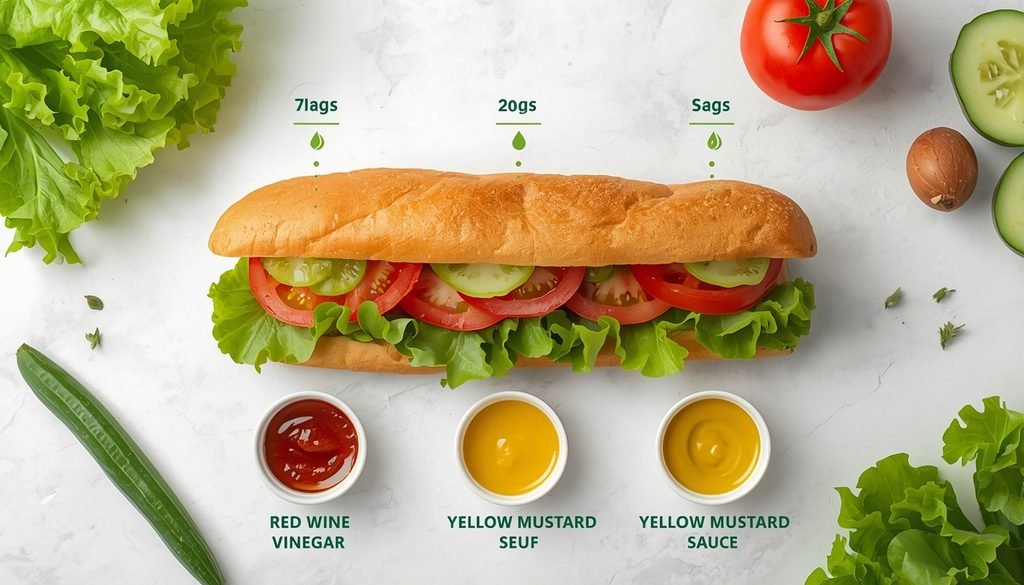
For example, Subway’s U.S. menu currently lists these sauce and condiment amounts for a sandwich serving:
| Subway Sauce or Condiment | Calories |
|---|---|
| Red Wine Vinegar | 0 |
| Yellow Mustard | 20 |
| BBQ | 51 |
| Sweet Onion Teriyaki | 56 |
| Hot Honey | 63 |
| Creamy Sriracha | 76 |
| Oil | 90 |
| Honey Mustard | 118 |
| MVP Parmesan Vinaigrette™ | 121 |
| Baja Chipotle | 137 |
| Peppercorn Ranch | 155 |
| Roasted Garlic Aioli | 160 |
| Regular Mayonnaise | 204 |
These figures come from Subway’s current U.S. menu and can vary by product, serving, or location.
Subway also lists some regional or product-specific options, such as Buffalo Sauce and Marinara Sauce. Their availability and nutrition information may differ by location.
How Does Subway Sauce Calories Work?
The calorie number you see for a sauce is based on a particular serving amount. This matters because adding more sauce means adding more calories.
Important Point
For Subway’s U.S. nutrition information, condiment values are tied to a standard amount used on the sandwich. Subway’s nutrition documents explain that some values are based on the amount placed on a 6-inch sandwich, while footlong nutrition can use two 6-inch servings.
So, if you order extra sauce, the actual calories in your meal can be higher than the listed standard amount.
This is especially important with high-calorie sauces such as mayonnaise, ranch, and garlic aioli.
Another Important Point
Not all sauces are high in calories.
Some choices are very light. Red Wine Vinegar is listed at 0 calories, while Yellow Mustard is listed at 20 calories on Subway’s U.S. menu.
Other sauces are much richer. Regular Mayonnaise is listed at 204 calories, while Roasted Garlic Aioli is 160 calories and Peppercorn Ranch is 155 calories.
This wide range is why checking sauce calories can help when building a lower-calorie meal.
Benefits of Knowing Subway Sauce Calories
Benefit 1: You Can Control Your Total Calories
Sauce is easy to overlook because it is usually added in a small amount. However, some sauces are calorie-dense.
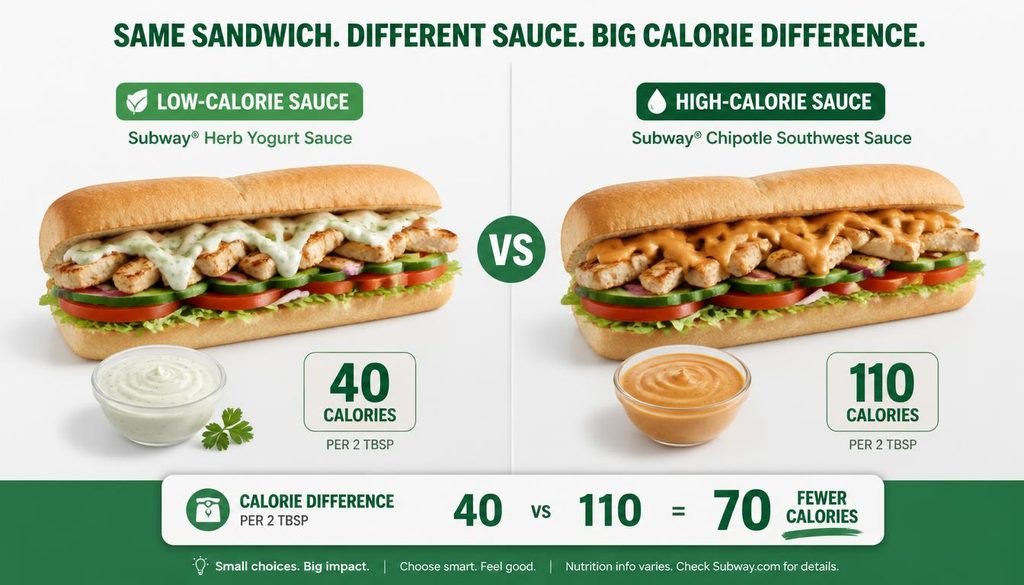
For example, choosing a 20-calorie mustard instead of a 204-calorie mayonnaise serving can make a large difference in the total calorie count of your sandwich.
Benefit 2: You Can Build a Meal That Fits Your Goal
People choose Subway for many different reasons. Some simply want a tasty sandwich, while others are watching calories or trying to balance their meals.
Knowing the calorie count of each sauce lets you make that choice without having to remove all flavor.
Benefit 3: You Can Compare Sauces Quickly
A sauce chart makes it easier to compare options.
For example, BBQ and Sweet Onion Teriyaki are lower in calories than Honey Mustard, Ranch, Baja Chipotle, or Mayonnaise according to Subway’s current U.S. menu.
How to Use Subway Sauce Calories
Step 1: Pick Your Main Sandwich
Start with the bread and protein you want.
Your sandwich calories do not come from sauce alone. Bread, cheese, meat, toppings, and sauces all contribute to the final total.
Step 2: Choose Your Sauce
Look at the sauce options and compare their calories.
If you want a lighter option, sauces such as Red Wine Vinegar or Yellow Mustard are among the lowest-calorie choices listed on Subway’s U.S. menu.
Step 3: Watch Multiple Sauces
Adding two or three sauces can raise the calorie total quickly.
For example, using a sauce with 100 calories and adding another sauce with 100 calories would contribute about 200 calories before considering the rest of the sandwich.
The exact total depends on the amount served.
Subway Sauce Calories Chart
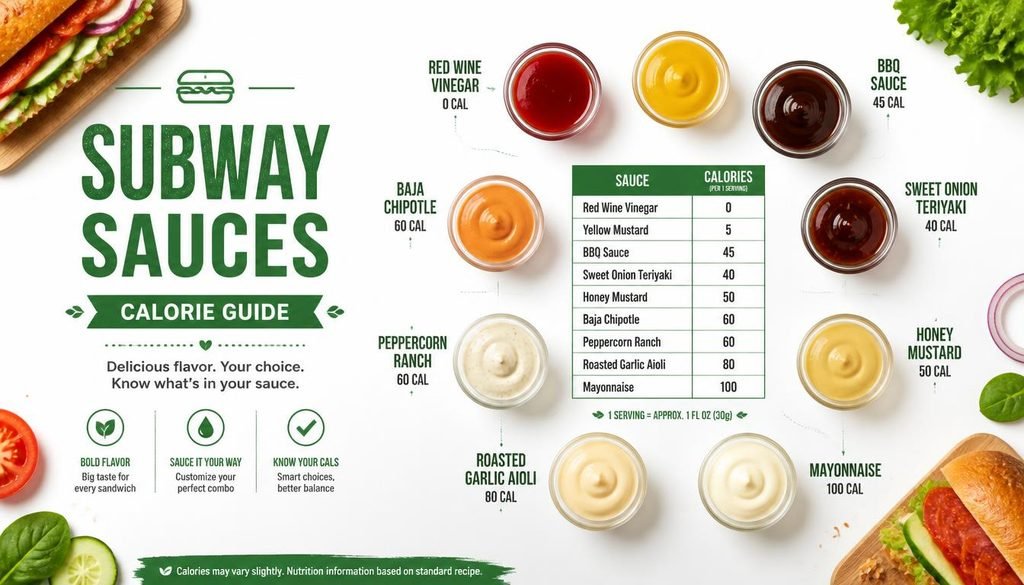
Here is a simple look at the main sauce and condiment options currently listed on Subway’s U.S. menu.
Low-Calorie Subway Sauces
Red Wine Vinegar — 0 calories
This is one of the lowest-calorie condiment choices. It adds a sharp, tangy taste without adding significant calories according to Subway’s listed value.
Yellow Mustard — 20 calories
Mustard is another relatively low-calorie choice. It can add strong flavor without the calorie load of creamy sauces.
BBQ — 51 calories
BBQ sauce adds a sweet and smoky flavor. Subway currently lists it at 51 calories per standard sandwich serving.
Sweet Onion Teriyaki — 56 calories
Sweet Onion Teriyaki provides a sweet, savory taste and is listed at 56 calories.
Hot Honey — 63 calories
Hot Honey is listed at 63 calories on current U.S. Subway menu pages where it is available. Availability can vary by location.
Medium-Calorie Subway Sauces
Creamy Sriracha — 76 calories
Creamy Sriracha combines heat with a creamy texture. Subway lists it at 76 calories.
Oil — 90 calories
Oil may seem simple, but it is calorie-dense because it is mostly fat. Subway lists its standard sandwich serving at 90 calories.
Honey Mustard — 118 calories
Honey Mustard has more calories than regular yellow mustard because of its richer, sweeter recipe. Subway lists it at 118 calories.
MVP Parmesan Vinaigrette™ — 121 calories
This dressing-style sauce is listed at 121 calories per standard sandwich serving.
Higher-Calorie Subway Sauces
Baja Chipotle — 137 calories
Baja Chipotle is a creamy, flavorful sauce and is listed at 137 calories on the current U.S. menu.
Peppercorn Ranch — 155 calories
Peppercorn Ranch is one of the higher-calorie sauce choices. Subway currently lists it at 155 calories.
Roasted Garlic Aioli — 160 calories
Garlic aioli is rich and creamy. Subway lists its standard serving at 160 calories.
Regular Mayonnaise — 204 calories
Regular Mayonnaise is currently the highest-calorie condiment among the major sauces shown on Subway’s U.S. menu at 204 calories per standard sandwich serving.
Practical Examples
Example 1: A Lower-Calorie Sauce Choice
Imagine you order a sandwich and choose Yellow Mustard instead of Regular Mayonnaise.
Yellow Mustard: 20 calories
Regular Mayonnaise: 204 calories
That is a difference of 184 calories from the sauce alone.
The rest of the sandwich stays the same, so the difference comes from the condiment choice.
Example 2: Using Two Sauces
Imagine a sandwich with:
- Yellow Mustard: 20 calories
- Sweet Onion Teriyaki: 56 calories
Together, those listed servings add 76 calories.
Now compare that with:
- Peppercorn Ranch: 155 calories
- Regular Mayonnaise: 204 calories
Together, those two listed servings add 359 calories.
The difference between these examples is large even before counting the bread, meat, cheese, and vegetables.
These are simple examples based on Subway’s listed sauce values. Actual calories can vary with serving size and location.
Common Mistakes
Mistake 1: Assuming All Sauces Have Similar Calories
They do not.
A light condiment such as Red Wine Vinegar may have almost no calories, while mayonnaise can add more than 200 calories at the listed serving amount.
Mistake 2: Forgetting About Extra Sauce
The calorie number is based on a listed serving. If more sauce is added, the calories can increase.
This is one reason your actual meal can contain more calories than a standard nutrition listing suggests.
Mistake 3: Looking Only at the Sauce
Sauce matters, but it is only one part of the meal.
Bread, cheese, protein, avocado, bacon, and other toppings can also add substantial calories. Subway’s online menu provides nutrition information for these ingredients as well.
Mistake 4: Assuming the Same Menu Is Used Everywhere
Subway menus and ingredients can vary by country and location.
For example, Subway publishes separate nutrition information for different markets, and its Australia guide lists sauce products and calorie values that differ from the U.S. menu.
That means you should check the nutrition information for your local Subway when accuracy matters.
Tips and Best Practices
Start by deciding how much sauce you really want. More sauce can mean more calories, especially when you choose creamy options.
For a lighter sandwich, consider sauces or condiments with lower listed calorie values. Red Wine Vinegar and Yellow Mustard are among the lowest-calorie choices on the current U.S. menu.
You can also mix flavor profiles without using large amounts of several sauces. One flavorful sauce may be enough.
When comparing sauces, do not look only at calories. You may also want to consider sugar, fat, sodium, and your overall meal.
Another useful tip is to check Subway’s official nutrition information before ordering. Subway currently provides a U.S. nutrition page with nutrition tables and ingredient information.
Remember that menu information can change. New sauces may appear, some sauces may become unavailable, and serving sizes may differ between products or markets.
Frequently Asked Questions
What is Subway Sauce Calories?
Subway sauce calories are the calories contributed by a sauce or condiment added to a sandwich, wrap, or salad. They vary widely, from 0 calories for Red Wine Vinegar to 204 calories for Regular Mayonnaise on Subway’s current U.S. menu.
How does Subway Sauce Calories work?
The listed calorie number is based on a standard serving used by Subway. Adding extra sauce can increase the actual calories in your meal, so the amount used matters.
Why is Subway Sauce Calories important?
Knowing Subway sauce calories helps you understand how much the condiment adds to your meal. This can be especially useful when you are comparing different sandwich options or trying to manage your total calorie intake.
What are the benefits of Subway Sauce Calories?
The main benefit is better meal planning. By comparing sauce calories, you can keep the flavor you enjoy while choosing a sauce that better fits your personal calorie target.
What are common mistakes?
Common mistakes include assuming all sauces have similar calories, forgetting about extra sauce, and ignoring the calories in the rest of the sandwich. Menu and nutrition values can also vary by country or location.
Conclusion
Subway sauce calories can make a meaningful difference in the total calories of a sandwich. The current U.S. Subway menu lists options ranging from 0 calories for Red Wine Vinegar and 20 calories for Yellow Mustard to 155 calories for Peppercorn Ranch, 160 calories for Roasted Garlic Aioli, and 204 calories for Regular Mayonnaise.
The best sauce depends on your taste and your personal nutrition goals. A simple way to make a lower-calorie choice is to compare sauces before ordering and pay attention to how much is added.
Because Subway menus can vary by location and change over time, use the official Subway nutrition information for the most accurate details for your order.