
Introduction
Subway calories can range from a light meal to a very large meal, depending on what you choose. The sandwich size, bread, meat, cheese, sauces, and toppings all affect the final calorie count.
For example, Subway’s U.S. menu currently shows a 6-inch Tuna sandwich at 560 calories, while the footlong version is 1,120 calories. Subway also lists separate calorie amounts for bread, cheese, sauces, and other add-ons, which means your choices can quickly change the total.
This guide explains Subway calories in simple terms. You will learn how to estimate calories, make lower-calorie choices, compare common ingredients, and build a meal that fits your goals.
Important: Subway menus and nutrition values can change by country, location, recipe, and portion size. Use the official Subway nutrition information for the most accurate number for your order.
Table of Contents
What Are Subway Calories?
Subway calories are the amount of energy you get from a Subway food or meal. Calories come from carbohydrates, protein, fat, and other nutrients in the food.
A sandwich with more bread, cheese, meat, sauce, or high-fat toppings usually has more calories.
Your total Subway calories depend on several things:
- Sandwich size
- Bread choice
- Meat or protein
- Cheese
- Vegetables
- Sauce
- Extra toppings
- Portion size
This is why two people can order the same type of sandwich but end up with different calorie totals.
How Do Subway Calories Work?
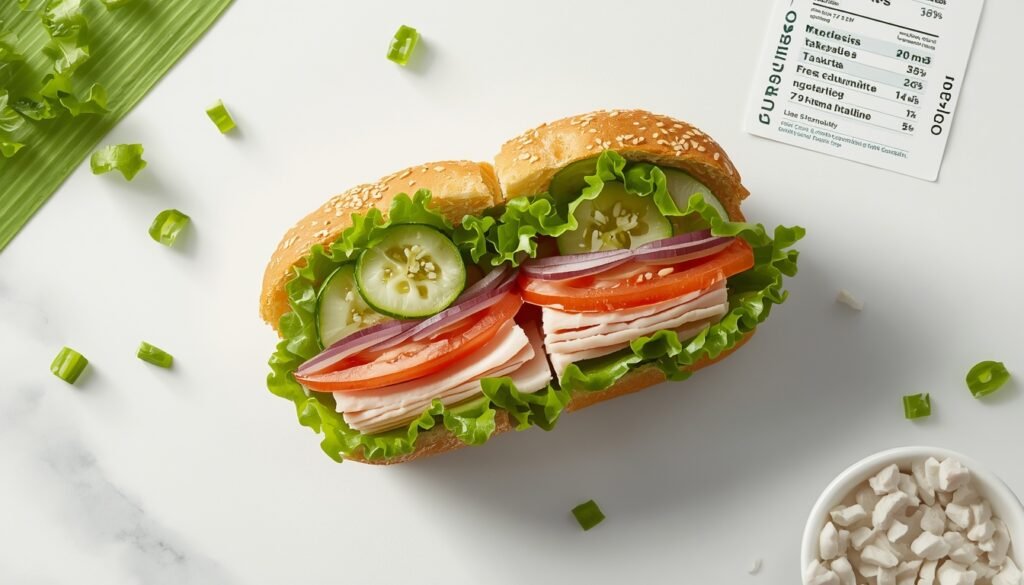
Think of your Subway sandwich like a group of building blocks.
Each ingredient adds something to the final nutrition total.
For example:
Bread + protein + cheese + vegetables + sauce = total Subway calories
Subway provides nutrition information so customers can see how different ingredients affect a meal. Its official U.S. nutrition pages also provide ingredient and allergy information.
Why Sandwich Size Matters
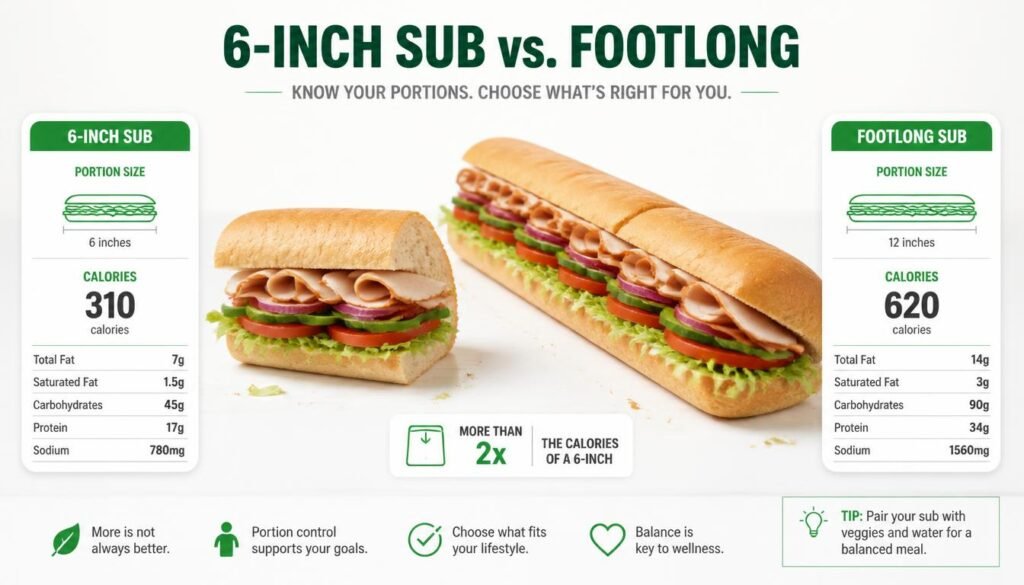
A 6-inch sandwich and a footlong are not equal.
A footlong is generally made from two 6-inch servings. Subway’s U.S. nutrition information states that footlong nutrition can be calculated by doubling the 6-inch serving for applicable sandwiches.
So, in simple terms:
6-inch sandwich × 2 = approximately one footlong sandwich
However, always check the current menu because recipes and products can change.
Subway Calories by Sandwich Size
One of the easiest ways to control Subway calories is to start with the sandwich size.
6-Inch Subway Calories
A 6-inch sandwich is smaller, so it usually has fewer calories than the footlong version.
For example, Subway’s current U.S. menu lists:
- 6-inch Tuna: 560 calories
- Footlong Tuna: 1,120 calories
That is a major difference from simply choosing a larger size.
Footlong Subway Calories
A footlong gives you more food, but it also increases calories, carbs, fat, sodium, and protein.
A footlong can fit a larger meal plan, but it may be more food than you need for one meal.
If you are watching your calorie intake, starting with a 6-inch sandwich can make portion control easier.
Subway Calories and Nutrition: What Matters?
Calories are useful, but they are not the only thing to check.
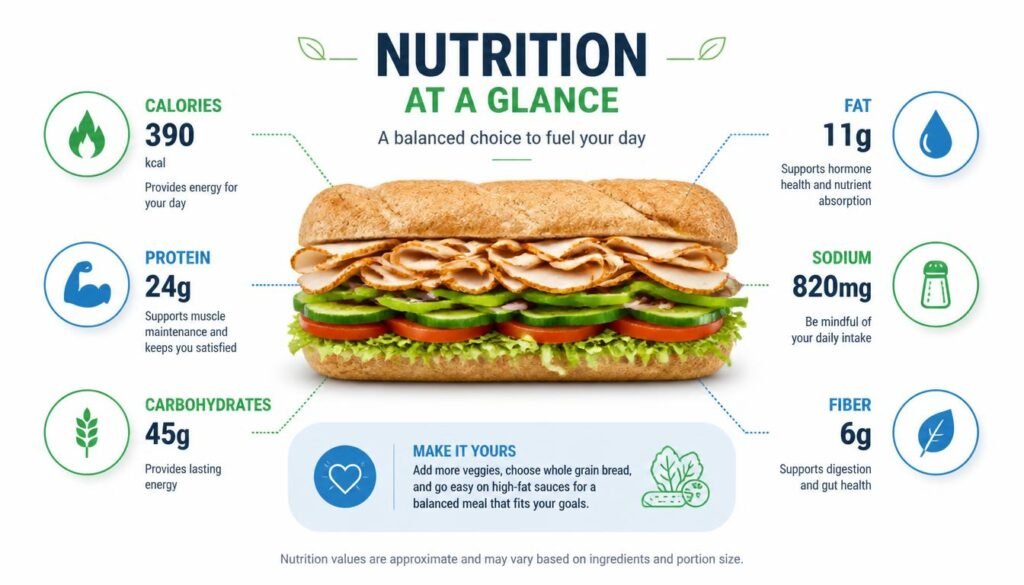
A more complete look at Subway nutrition includes:
Protein
Protein helps support muscles and keeps you feeling full.
Meat, poultry, tuna, and some other fillings can add a good amount of protein to a sandwich.
Carbohydrates
Carbs mainly come from bread, wraps, sauces, and some toppings.
If you want to reduce carbs, changing the bread or choosing a salad can make a large difference.
Fat
Cheese, creamy sauces, bacon, and some meat choices can add more fat.
Fat is not automatically bad. It is still important to look at the total amount in your meal.
Sodium
Sodium is another important part of Subway nutrition.
Processed meats, cheese, sauces, and other ingredients can contribute a lot of sodium. Checking the nutrition label can help you compare choices.
Fiber
Vegetables and some bread options can add fiber.
Fiber is important for normal digestion and can help make a meal more filling.
How Bread Changes Subway Calories
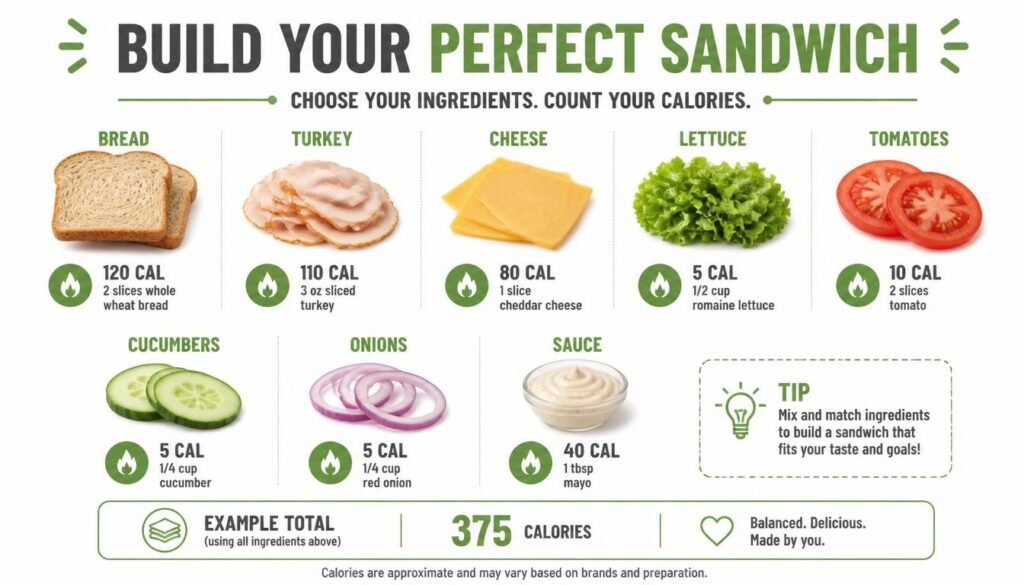
Bread is one of the first things to look at when counting Subway calories.
Different breads can have different calorie values.
For example, Subway’s current U.S. menu lists these bread choices for its Tuna sandwich:
- Artisan Italian: 413 calories
- Flatbread: 448 calories
- Hearty Multigrain: 402 calories
- Italian Herbs & Cheese: 497 calories
These figures are presented for the footlong configuration shown on Subway’s product page.
This shows why bread choice matters.
Simple Bread Tip
When building a lower-calorie sandwich, compare bread options before adding sauces and extras.
Even a small difference becomes more important when you order a large sandwich.
How Cheese Affects Subway Calories
Cheese can add a noticeable number of calories to a Subway sandwich.
Subway’s current U.S. menu lists examples such as:
- American cheese: 160 calories
- Pepper Jack: 196 calories
- Provolone: 180 calories
- Monterey Cheddar: 217 calories
These values show that cheese can have a bigger impact than many vegetable toppings.
How to Save Calories
You can:
- Skip cheese.
- Choose a smaller amount when available.
- Compare different cheese options.
- Add more vegetables for extra texture and flavor.
How Sauces Affect Subway Calories
Sauces can be easy to overlook.
A sandwich may seem light until several high-calorie sauces are added.
Creamy sauces and dressings can add more calories than vegetables.
That does not mean you must avoid sauces completely.
Instead, try:
- One sauce instead of several
- A lighter sauce
- A smaller amount
- Sauce on the side
The goal is to control portions without removing all the flavor.
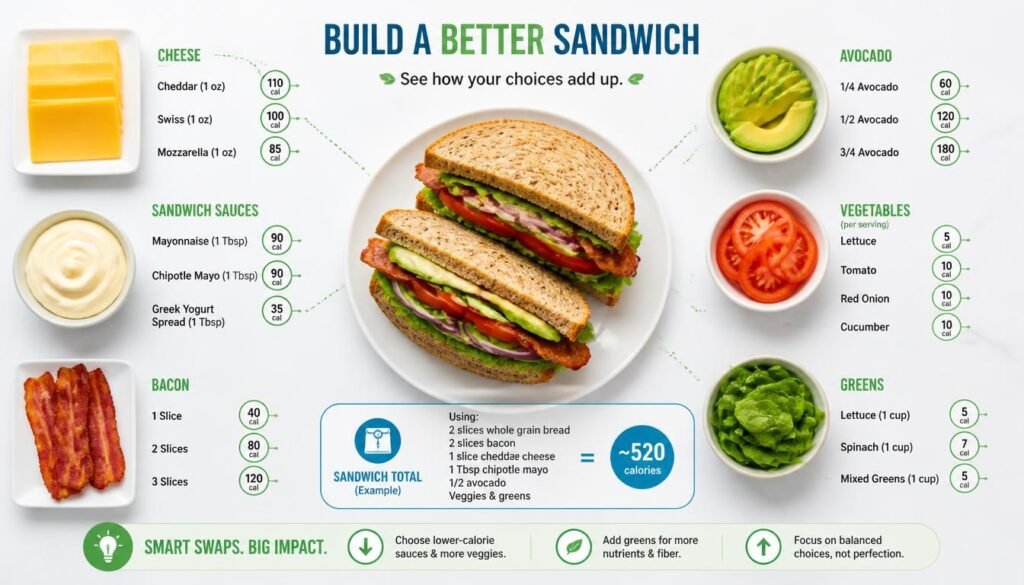
Subway Calories and Toppings
Vegetables usually add fewer calories than cheese, creamy sauces, or fatty extras.
For example, Subway’s U.S. menu currently lists:
- Lettuce: 5 calories
- Spinach: 3 calories
- Tomatoes: 13 calories
- Cucumbers: 4 calories
These small numbers can make vegetables a useful way to add volume and crunch without adding many calories.
Higher-Calorie Add-Ons
Some extras can add much more.
Subway’s current U.S. menu lists examples such as:
- Bacon: 159 calories
- Sliced avocado: 91 calories
- Smashed avocado: 140 calories
- Pepperoni: 162 calories
So, when counting Subway calories, do not look only at the main sandwich.
Extras can make a big difference.
How to Build a Lower-Calorie Subway Meal
You do not need to make your Subway order boring.
A few simple changes can reduce the total calorie count.
Step 1: Choose a Smaller Size
Start with a 6-inch sandwich instead of a footlong when a smaller meal fits your needs.
Step 2: Pick Your Protein
Choose a protein that fits your nutrition goals.
Chicken, turkey, tuna, and other protein choices can have different calorie and protein amounts.
Step 3: Add Lots of Vegetables
Vegetables can add crunch, flavor, and volume.
Good choices include:
- Lettuce
- Tomatoes
- Cucumbers
- Spinach
- Onions
- Peppers
Step 4: Be Careful With Cheese
Cheese can add a meaningful amount of calories.
Choose it when you enjoy it, but remember to count it.
Step 5: Control the Sauce
One of the easiest ways to keep calories under control is to limit creamy sauces and large portions.
Step 6: Check the Full Meal
Remember to include:
- Sandwich
- Chips
- Cookies
- Dessert
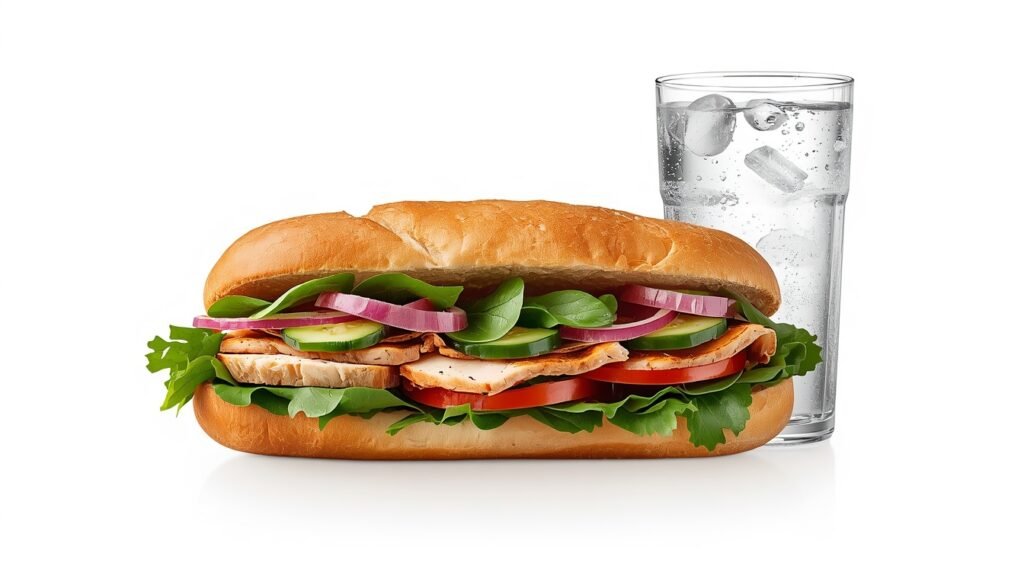
- Drink
- Extra toppings
A low-calorie sandwich can become a much larger meal when several sides are added.
How to Count Subway Calories Step by Step
Here is a simple method.
Step 1: Check the Base Sandwich
Look up the calories for the sandwich size you want.
Step 2: Check the Bread
Make sure you are using the correct bread and serving size.
Step 3: Add Cheese
Include the calorie value for your selected cheese.
Step 4: Add Extras
Count bacon, avocado, pepperoni, and other add-ons.
Step 5: Add Sauces
Check the nutrition information for the amount of sauce you choose.
Step 6: Add Your Side and Drink
Do not stop at the sandwich.
Include your drink and side dish in the final total.
Example
Imagine a meal contains:
- Sandwich = 500 calories
- Cheese = 180 calories
- Extra topping = 100 calories
- Sauce = 80 calories
- Drink = 150 calories
Total = 1,010 calories
This is only an example. Your real total depends on the exact products and portions you order.
Practical Subway Calorie Examples
Let’s look at some simple examples.
Example 1: Smaller Sandwich
You order a 6-inch sandwich with vegetables and a light amount of sauce.
This can be much lower in calories than ordering the same sandwich as a footlong with extra cheese and multiple sauces.
Example 2: Same Sandwich, Different Extras
Person A orders:
- 6-inch sandwich
- Vegetables
- No cheese
- One sauce
Person B orders:
- 6-inch sandwich
- Cheese
- Bacon
- Avocado
- Multiple sauces
Both started with the same sandwich, but their final Subway calories could be very different.
Example 3: Footlong Meal
A footlong sandwich can contain twice the calories of the corresponding 6-inch serving for many products.
For example, Subway currently lists its Tuna sandwich at 560 calories for 6 inches and 1,120 calories for a footlong.
This is why serving size should be one of the first things you check.
Are Subway Sandwiches Healthy?
There is no single answer.
A Subway sandwich can fit into many different eating patterns, but the nutrition depends heavily on what you order.
A sandwich may contain useful nutrients such as:
- Protein
- Carbohydrates
- Fiber
- Vitamins and minerals
At the same time, some combinations can be high in:
- Calories
- Sodium
- Fat
- Added sugar
The best choice depends on your overall meal and your personal nutrition needs.
Subway provides official nutrition and allergen information to help customers make more informed choices.
Benefits of Checking Subway Nutrition
Checking Subway calories before ordering can help you make better decisions.
1. Better Portion Control
You can decide whether a 6-inch or footlong makes more sense for your meal.
2. Easier Calorie Tracking
If you track calories, official nutrition information gives you a starting point.
3. Better Ingredient Choices
You can see how cheese, sauces, and extras change your meal.
4. More Balanced Meals
Looking at protein, carbs, fat, sodium, and fiber gives you a fuller picture than calories alone.
5. Fewer Surprises
A sandwich may look small but still contain a lot of calories once you add extras.
Common Mistakes When Counting Subway Calories
Even careful calorie counters can miss a few things.
Mistake 1: Only Counting the Sandwich
Many people forget drinks, chips, cookies, and sauces.
Always count the whole meal.
Mistake 2: Ignoring Portion Size
A 6-inch sandwich and a footlong are very different portions.
Mistake 3: Forgetting Cheese
Cheese can add a significant number of calories.
Mistake 4: Forgetting Extra Meat
More protein can also mean more calories.
Mistake 5: Assuming All Vegetables Have the Same Calories
Vegetables are often relatively low in calories, but ingredients can vary.
Mistake 6: Using Old Nutrition Information
Restaurant menus can change.
Subway publishes updated nutrition information online, and different countries may have different menus and values.
Tips for Lower-Calorie Subway Orders
Here are simple ideas you can use on your next visit:
- Choose a 6-inch sandwich when you want a smaller meal.
- Add plenty of vegetables.
- Compare bread choices.
- Limit high-calorie extras.
- Watch cheese portions.
- Use less sauce.
- Choose water or a low-calorie drink when it fits your plan.
- Check the nutrition information before ordering.
You do not have to change everything at once.
Even one or two small changes can make your meal different.
Subway Calories for Weight Loss
Some people search for Subway calories because they want to lose weight.
The key point is that no single Subway sandwich causes weight loss or weight gain by itself.
Your overall food intake matters more than one meal.
For someone tracking calories, Subway can be easier to manage when you:
- Check the calories before ordering.
- Pick a portion that fits your daily plan.
- Add vegetables.
- Control sauces and extras.
- Count drinks and sides.
A simple meal can often be easier to track than a large meal with many add-ons.
Subway Calories for a High-Protein Meal
If protein is your main goal, look beyond calories.
Check the nutrition information for:
- Protein
- Total calories
- Fat
- Carbohydrates
- Sodium
A higher-protein meal can be useful, but the best option depends on your personal diet and needs.
You may also want to compare sandwiches with salads or bowls, depending on the current menu in your area.
How to Find the Most Accurate Subway Calories
The safest method is to use Subway’s official nutrition information.
Subway provides nutrition data on its website, along with ingredient and allergy information.
Because Subway menus differ by country, you should use the nutrition page for your location whenever possible.
For example, Subway maintains separate nutrition resources for the United States, Canada, the United Kingdom, Ireland, Australia, and other markets.
Frequently Asked Questions
How many calories are in a Subway sandwich?
It depends on the sandwich, size, bread, cheese, sauces, and toppings. A 6-inch Tuna sandwich on Subway’s current U.S. menu is listed at 560 calories, while the footlong is 1,120 calories.
How many calories are in a 6-inch Subway?
There is no single calorie number for every 6-inch sandwich. Different recipes have different calorie counts, and your toppings can change the total.
How many calories are in a Subway footlong?
A footlong can have about twice the calories of a corresponding 6-inch serving for products where Subway provides two 6-inch servings as the footlong basis.
What Subway sandwich has the lowest calories?
The answer depends on the current menu, country, bread, and recipe. Rather than relying on an old list, compare the current nutrition information for the sandwiches available at your location.
Does cheese add many calories at Subway?
Yes. Cheese can add a noticeable amount. For example, Subway’s U.S. menu currently lists American cheese at 160 calories and Monterey Cheddar at 217 calories.
Are Subway vegetables low in calories?
Many vegetable toppings are relatively low in calories. Subway’s current U.S. menu lists lettuce at 5 calories, spinach at 3 calories, tomatoes at 13 calories, and cucumbers at 4 calories.
Do sauces increase Subway calories?
Yes. Sauces can add calories, especially when you use more than one sauce or choose a creamy dressing.
Is Subway good for weight loss?
It can fit into a calorie-controlled eating plan, but the final nutrition depends on your full order and overall diet. Portion size, sauces, cheese, sides, and drinks all matter.
Does a footlong have twice the calories of a 6-inch?
For many Subway products, the footlong nutrition is based on two 6-inch servings. However, you should check the official nutrition information for the exact item you are ordering.
Are Subway calories the same in every country?
No. Subway menus and nutrition information can differ by country and market. Official Subway nutrition pages provide location-specific information.
Where can I check Subway calories?
The best place to check is Subway’s official nutrition page or the nutrition information for your local Subway market.
Final Thoughts on Subway Calories
Subway calories depend on what you put in your meal. Sandwich size, bread, protein, cheese, sauces, and extras all play a role.
The easiest way to manage your Subway calories is to look at the full order instead of the sandwich alone.
Choose your portion first, add vegetables, watch calorie-heavy extras, and check the official nutrition information for your exact item.
Most importantly, remember that nutrition information can change. For the most accurate Subway calories, use the current Subway menu and nutrition guide for your country before ordering.